Mechanisms of actin cytoskeleton network mediated mechanical signaling
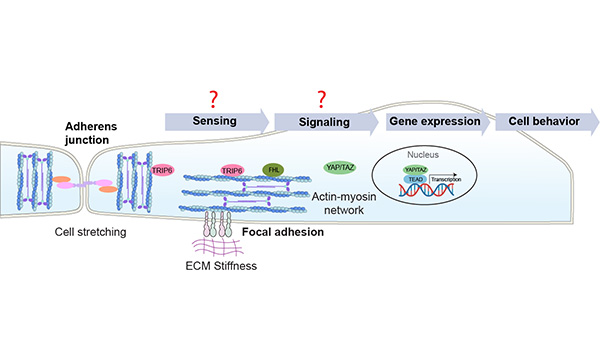
The actin cytoskeleton functions as a central integrator of external mechanical forces, converting them into biochemical signals through mechanotransduction to regulate gene expression. Defects in this process have been implicated in a variety of diseases, including muscular dystrophies, cardiomyopathies, hearing loss, and cancer metastasis. Our understanding of the molecular mechanisms transmitting mechanical signals to mechanoresponsive transcriptomes has evolved substantially over the past decade. Transcriptional factors and co-activators in distinct signaling pathways, including YAP/TAZ, twist, and β-catenin, have emerged as key mediators of mechanical signals. However, how mechanical forces are directly sensed and converted to biochemical signals to control transcriptional programs remains a fundamental question in the field. Our lab employs a multidisciplinary approach to unveil the molecular mechanisms by which actin cytoskeleton senses and translate mechanical signals, with the ultimate goal of developing new therapeutic strategies that target mechanical signaling in disease.